
What Everyone Gets Wrong About the Maldives
- durandurancontiki
- Jan 3
- 5 min read
Updated: Mar 6

When most people think of the Maldives, they picture rich celebrities, honeymooners, and overwater villas that cost more per night than most people’s monthly rent.Because of that, they assume the Maldives isn’t for them.
That couldn’t be further from the truth.
By the end of this, I hope you’ll look at the Maldives differently — and maybe even consider skipping Italy for these extraordinary islands.
Isn't the Maldives just a honeymoon spot?
For most people, the image of the Maldives is shaped by what they see online: private islands, infinity pools, champagne breakfasts. And yes, those places exist — but they’re only part of the story.
To understand the Maldives properly, you first need to understand how these islands even exist.
The Maldives is made up of ancient coral atolls, formed on top of old volcanic mountains that sank back into the ocean millions of years ago. Over time, reefs and sandbanks formed just under the surface, eventually creating just under 1,200 islands, scattered across the Indian Ocean like stepping stones.
Out of these islands, roughly 200 are local islands, where Maldivians live, and roughly 200 are resort islands, purpose-built for tourism. And that distinction explains almost everything people get wrong about the Maldives.
When people say, “The Maldives is only for honeymooners and celebrities,” they’re usually talking about the resort islands. These islands are privately owned, often man-made or heavily reshaped, with a single luxury resort taking up the entire space.
Prices on these islands can range from $1,500 to $5,000 per night, and once you arrive, you’re locked into their ecosystem. Food, drinks, transfers, activities — they control it all. It’s like Monopoly, and they own Mayfair and Park Lane.
So people see those prices, close their laptops, and decide they’ll save the Maldives for “one day,” while treating their partner to a Nando’s instead.
But that’s only half the Maldives.
The real game-changer is the local islands.
Local islands are lived on by Maldivians, with family-run guesthouses and small hotels. Staying on one of these islands costs around 10% of what you’d pay on a resort island, and you’re not being short-changed.
You still get air-conditioning, modern rooms, great service, snorkelling, diving, and boat trips. But you also get something resorts can’t offer: real island life. You meet locals, eat local food, and see how the Maldives actually works day to day.
Isn't it an islamic country?
Why are there dress rules?Why is alcohol banned?Isn’t the Maldives under Sharia law?
And this is where the history matters.
Long before the Maldives became a Muslim country, the islands were Buddhist. Traders from India and Sri Lanka passed through regularly, and Buddhism shaped island life for centuries.
But Maldivian history is full of legend, and one story is still told today.
According to local folklore, the islands were once plagued by a sea monster that lived in a cave. To keep it calm, villagers would sacrifice a young virgin, hiding her in the cave overnight and hoping she would never return.
One day, an Islamic trader sailing along the ancient Arab trade routes stopped at one of the islands. When he heard about the creature and the ritual, he offered to take the girl’s place.
That night, he secretly hid the woman in his room. Then he went alone to the cave, sat inside it, and prayed all night, reciting verses from the Qur’an.
In the morning, the villagers went to the cave, expecting the worst.
Instead, they found the trader alive and unharmed.
Shocked, they asked him what magic he had used.
He replied that there was no magic — only the words of his prophet and the words of his God.
According to legend, from that moment on, the islands converted to Islam.
Whether you take the story literally or symbolically, it explains something important: Islam didn’t arrive in the Maldives through conquest, but through trade, storytelling, and belief. And that’s why, even today, the Maldives is an Islamic country — but a relaxed, welcoming one.
This history is why local islands follow Islamic customs. Alcohol is banned on local islands, and visitors are asked to dress modestly when walking through towns.
That means covering up between the beach and your accommodation — no bikinis in the streets, no walking around shirtless.
But it’s nothing extreme.
Designated bikini beaches exist, locals are friendly and relaxed, and tourism is welcomed.
And if you’re someone who likes a drink before bed, the Maldives has found a workaround.
There are boats anchored just offshore, often called floating bars. Because they aren’t technically on land, they don’t fall under local laws. For around $10, a water taxi will take you out to one, where you can buy drinks freely.
Another option is a resort day trip. You pay for a day pass and get full access to a luxury resort — food, alcohol, pools, beaches, the lot. It’s the best of both worlds: local island prices for accommodation, and resort luxury when you want it.
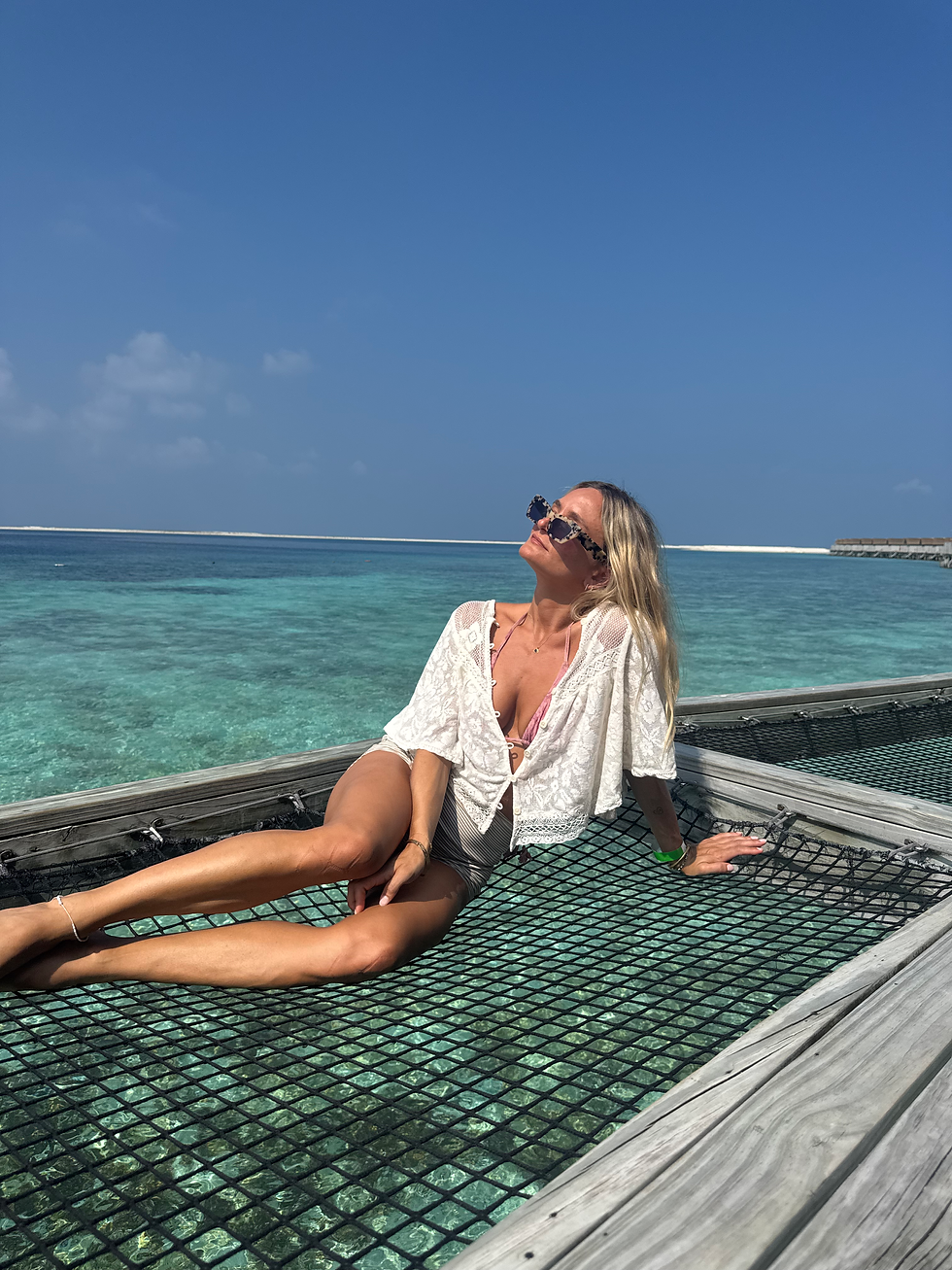
You can even lie in a hammock next to a multi-million-dollar villa and tell your ten Instagram followers you’ve finally made it.
Another thing people get wrong about the Maldives is the wildlife.
“Isn’t it scary diving with sharks?”
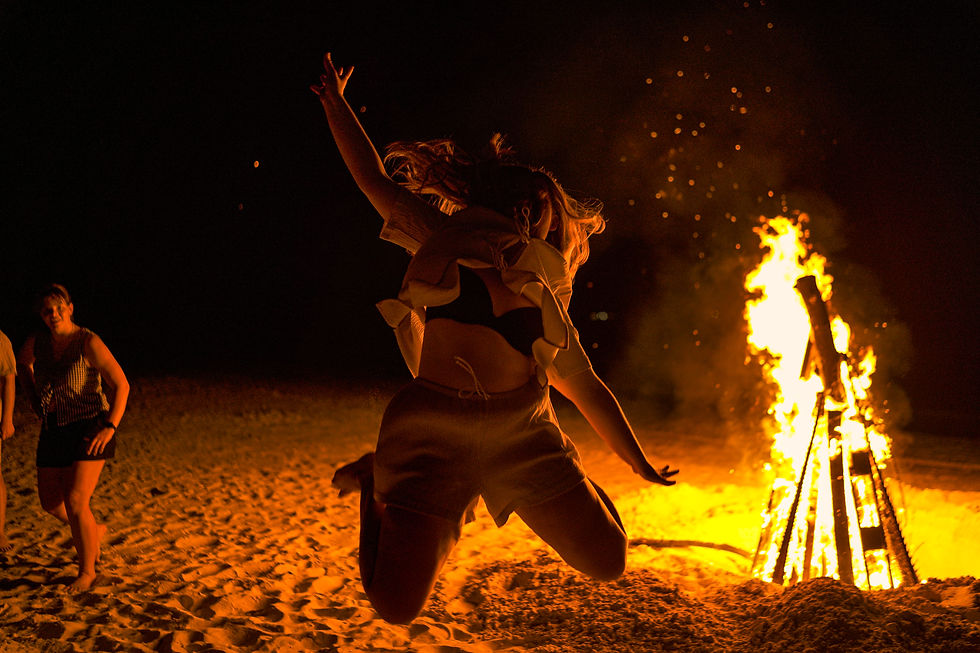
I thought that too — until my first time in 2024, just off the coast of Fulidhoo.
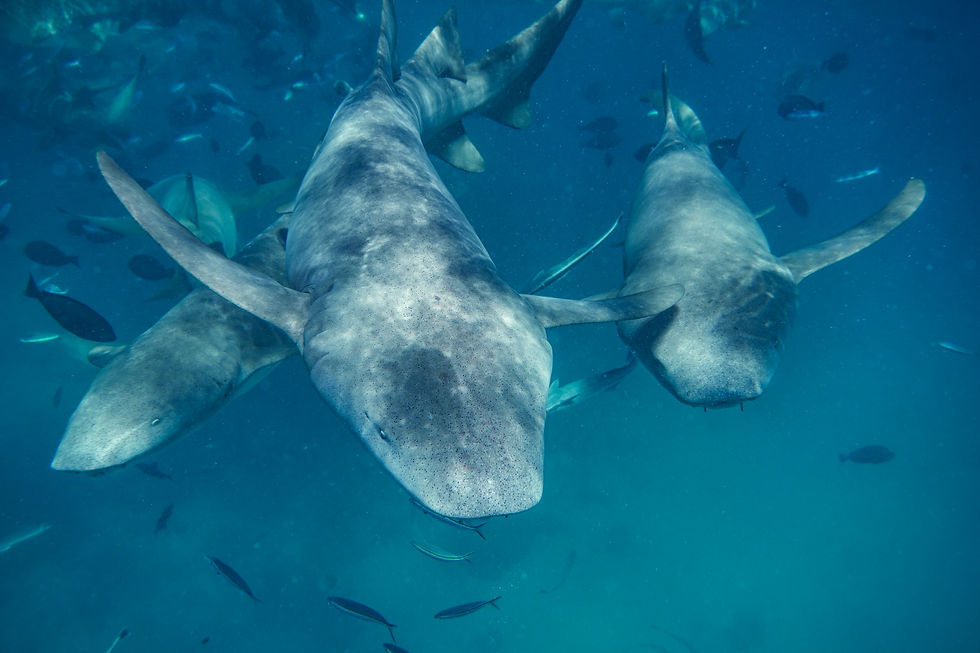
We came across a shiver of nurse sharks — yes, that’s actually what a group of sharks is called. Fins everywhere. It looked like something straight out of Jaws.
I jumped in anyway.
There must have been at least 20 sharks, circling calmly beneath the boat. I swam down about seven metres, trying to get the perfect shot, when I suddenly realised I needed air.
As I searched for a way out, one shark swam directly underneath me, its dorsal fin brushing against my chest.
I stayed calm, floated, and dolphin-kicked my way out of the centre. Every few seconds, I could feel them brush past me like sandpaper.
When I finally climbed back onto the boat, I looked back at them — and realised something.
They weren’t scary.
They were goofy.
Nurse sharks are like puppies. They mostly eat crabs and small fish and pose almost no threat to humans. These sharks have been hand-fed for over 60 years, to the point that when tourism stopped in 2020, many of them actually lost weight because humans weren’t around.
Most shark incidents happen when people don’t respect them. I once saw a video of divers grabbing and pulling a nurse shark. One guy pushed his luck, grabbed it around the waist, tried to kiss it, and got bitten on the lip.
Seven stitches.
Honestly? Fair enough.
Respect wildlife, keep your distance, and you have nothing to fear.
The Maldives isn’t just for celebrities.It isn’t just for honeymoons.And it’s nowhere near as expensive as people think.
It’s one of my top four destinations in the world, and once you understand how it really works, it becomes accessible, affordable, and unforgettable.
If this has sold you on the idea, check out the tour linked below — it’s one I genuinely recommend.
Hope to see you out there
Duran.



Comments